Zhang Hongtu
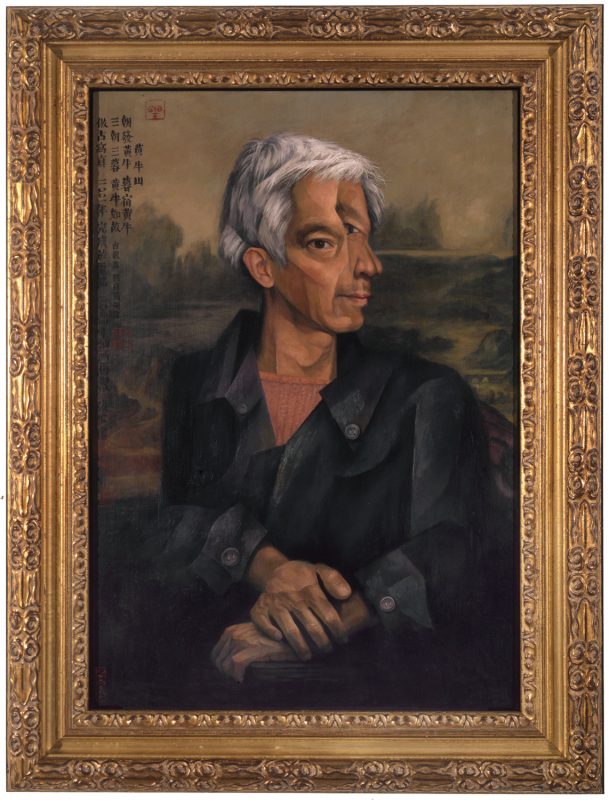
Zhang Hongtu, Self-Portrait in the Style of the Old Masters, 2004, oil on wood panel 38 x 29 in.
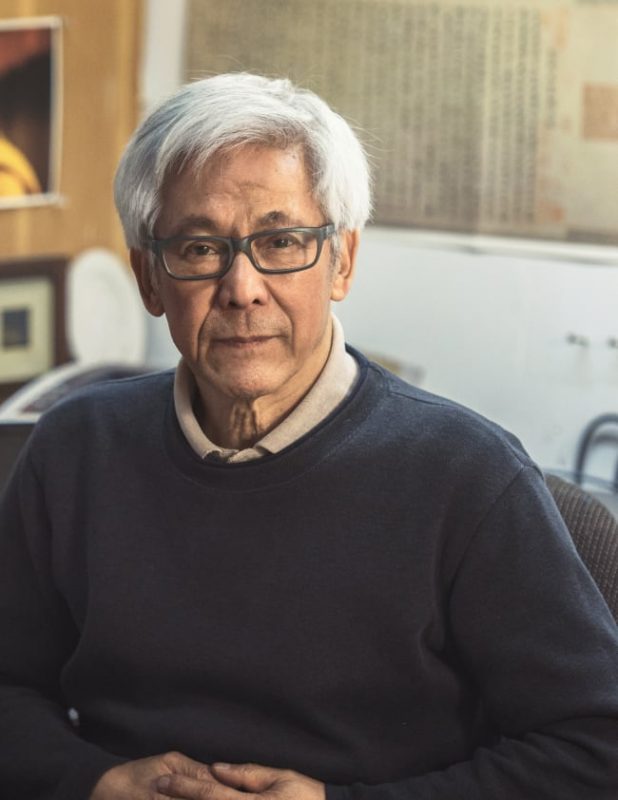
Zhang Hongtu was born to a Muslim family in Pingliang, China in 1943. He began his art studies at the Central Academy of Arts in Beijing at the age of 16 and continued to do so at the age of 39. A majority of his artwork is a fusion between western-style and Chinese themes, as well as focusing on criticizing the Chinese dictatorship and painting Chinese landscapes. His art forms range from paintings, sculptures, collages, and ceramics.
According to his interview in The New York Times, Zhang began to create his work related to Mao as a way to let go of his fear. He worked on Mao as a subject in order to get over it by cutting out his image as well as using it in his pop-influenced pieces. While growing up in China, Zhang went from believing Mao to doubting him. At first, he participated in the propaganda and even broke into the British Legation with other students. However, when given the opportunity to travel through China, he was able to see the country’s sad reality, where children and other people were killed in fighting and subject to other traumatic experiences. Zhang saw the harsh reality that people were facing and began doubting Mao.
Zhang’s work allows the artist to criticize the communist regime in China and how it has limited the people’s free will and freedom of thought. His goal is to bring attention to what he feels are China’s inhumane restrictions on its people. This is true even if the current situation in China today is not the exact same as they were when he was living there during the Mao Revolution. Zhang feels that his work can still help educate those who see it in the future even if just by teaching them a little history through the eyes of someone who personally experienced it.
✦✦✦
Conceptual Art
Conceptual Art
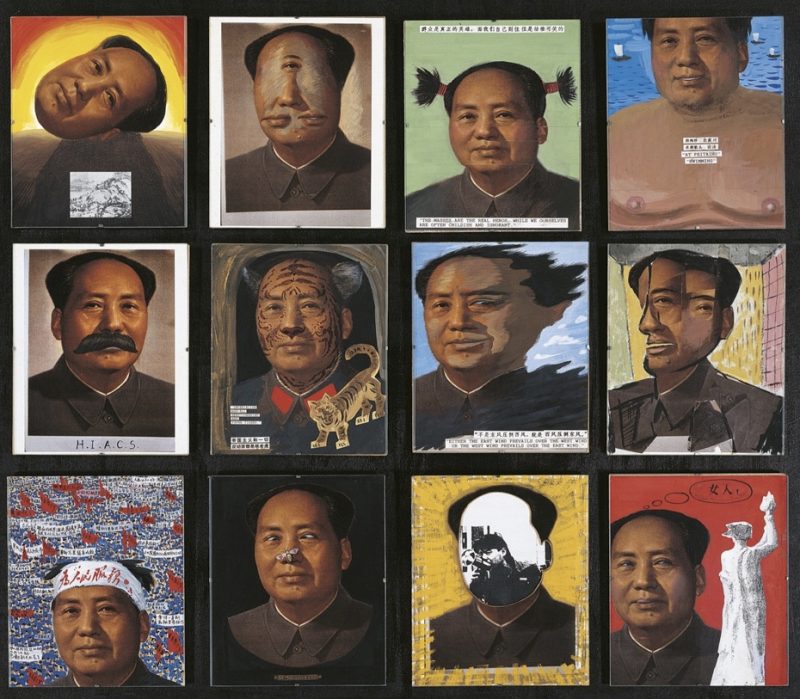
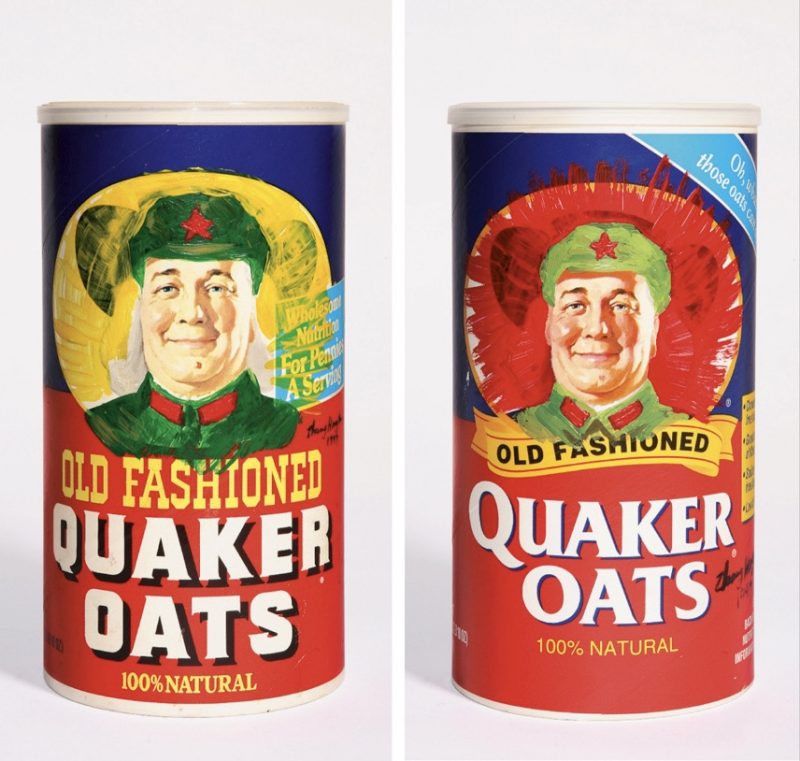
Top Left: Zhang Hongtu, Chairman Mao (12 works), 1989, Chairman Mao (12 units), 1989, photo collage and acrylic on paper, 8 ½ x 11 in. each.
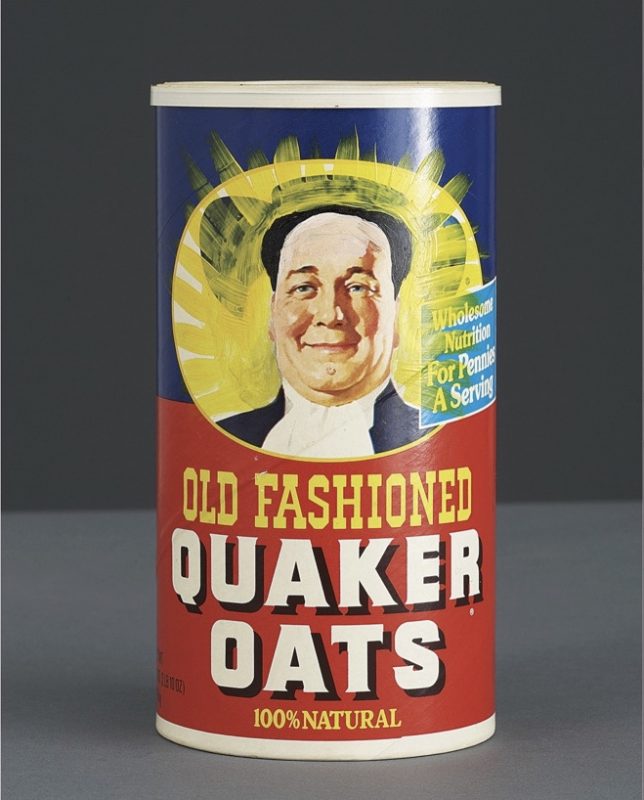
Bottom Left and Right: Zhang Hongtu, Long Live Chairman Mao #29, 1989 and Quaker Oats Mao, 1987, from the series “Long Live Chairman Mao,” acrylic on Quaker Oats box, 9 ¾ x 5 in. The image of two boxes made in 1989.
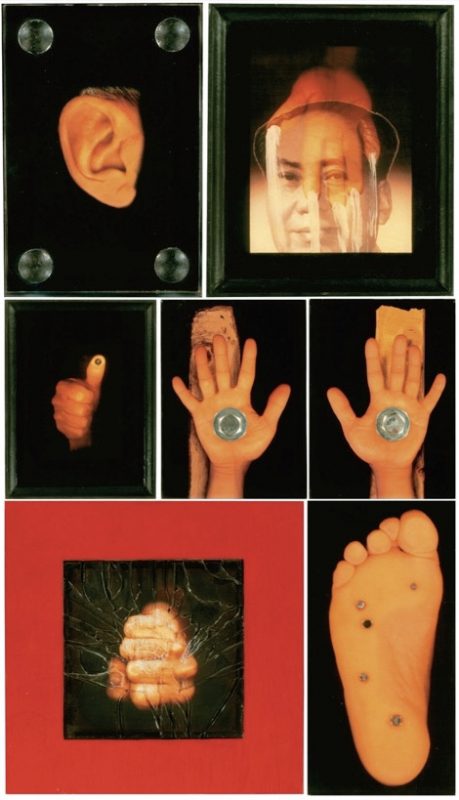
Center: Zhang Hongtu, The Parts of my body (set of 7), computer scanned and printed image with mixed media, variable size, 1996.
A lot of Zhang Hongtu’s work has been inspired by his experience of immigrating from China to New York. With a new life in U.S., Zhang was able to gain a lot of positive creativity which helped his expression with art. As a Chinese immigrant in New York, Zhang embraced his identity and incorporated his culture and personal experiences into his work. Along with being an immigrant in America, Hongtu also felt like an outsider as a Muslim back in China.
Zhang includes styles of traditional Chinese paintings, western art, and art history to intertwine a sense of humor and mischief into his work. His conceptual artwork contains interpretations of well-known artists like Picasso and historical Chinese iconology fused with American consumer products. Much of his work also pertains to criticizing Chinese authorities and their government. He refers to this type of work as “political pop” which strongly exemplifies these ideas that are highlighted in his conceptual art. Zhang hopes to bring a new perspective to those who view his work by merging the East and West and the past and present to show their similarities and blur those lines to put them into a new and fresh context.
✦✦✦
Ecological Art
EcoArt
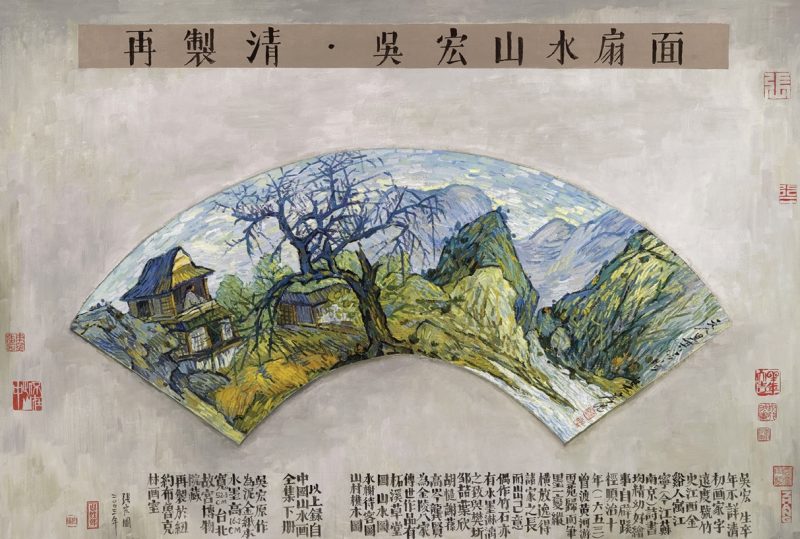
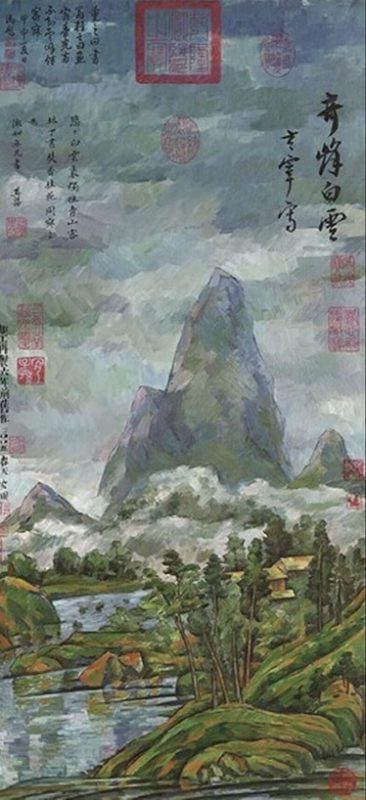
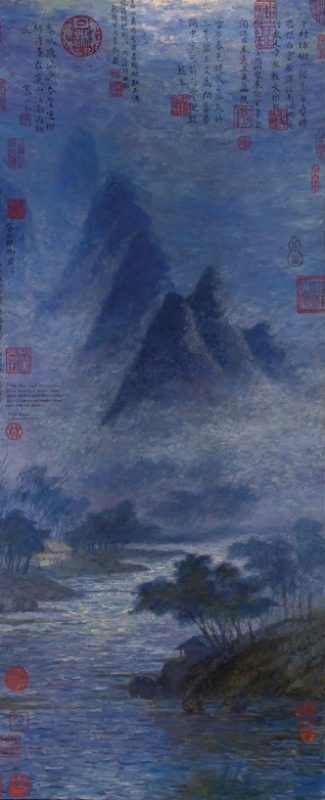
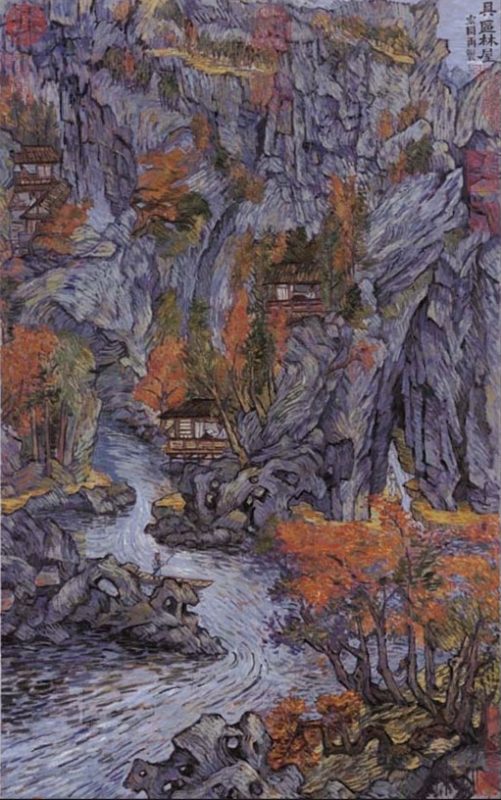
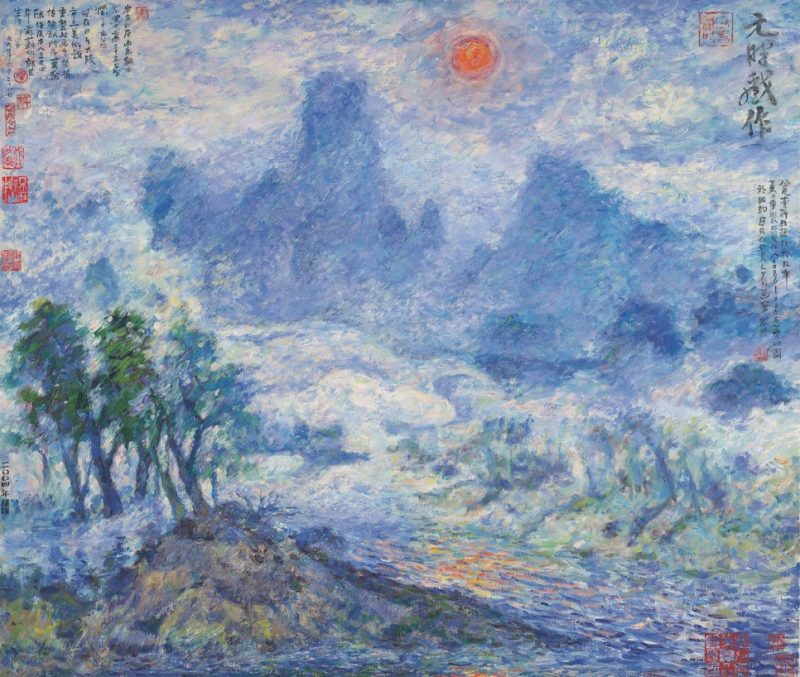
From Left to Right:
Top left: Zhang Hongtu, Wu Hong – Van Gogh, oil on canvas, 40 x 60 in., 2003.
Bottom Left: Zhang Hongtu, Mi Youren – Monet, oil on canvas, 44 x 52 in., 1999.
Zhang Hongtu, Wen Zhengming – Monet, oil on canvas 96 x 40 in., 1999.
Zhang Hongtu, Wang Meng – Van Gogh, oil on canvas, 70 x 44 in., 2003.
Zhang Hongtu never used to paint nature and scenery very often. This all changed when after a decade, in 1997, he went back to visit China. During a 2020 EcoArt Salon at Rutgers University-Newark, he told the story of how he went to the river that he used to visit every day, and how from that very first second, he noticed something was off. From a distance, he was able to smell the water, and he said it was not clear but was more “like a soy sauce color”. After seeing how much pollution and development could damage a region, he went back home to New York and did research. He found that the United States has been dealing with the same climate change problems as well as damage to landscapes. This inspired him to start painting scenery and landmarks. He would paint them to look like how they should be without pollution, as well as what these environments would look like today with environmental pollution and the climate crisis. For his ecological art, Zhang uses the medium of oil paint intermixed with Chinese themes and art styles, to capture the beauty of the scenery being affected.
✦✦✦
Interview With Zhang Hongtu
Q: What do you do if you need inspiration during difficult times?
A: I stop working, forget about art, and pay more attention to the details in everyday life.
Q: How has immigrating to the USA affected your art, and how have you made it a part of your art?
A: As an immigrant, there are often more than two cultural and traditional backgrounds. When doing art with multiple backgrounds, you feel there are a broader field and more freedom.
Q: What were some criticism you received, and how has it made your art change?
A: My work has received both positive and negative criticisms. No criticism will change my art.
Q: Have you ever worked with other artists, and if so, how was that experience?
A: I have worked with other artists, and the best experience is to exchange views and learn from each other.
Q: Favorite art piece? Favorite medium? Favorite kind of art?
A: I have been doing art for more than half a century, and different time periods have different “Favorite art pieces.” From popcorn, soy sauce to computers, the “Favorite medium” keeps changing. “Favorite kind of art” is the art that has an interesting concept with a strong visual impact.
Q: If any, how has personal experiences affected your art?
A: Personal experiences during the Cultural Revolution (1966-1967) and personal life experiences after moving to New York City in 1982.
Q: How old were you when you started doing art?
A: I went to an art school at the age of 16, and started doing the art I wanted to do at the age of 39.
Q: Is there any artwork of yours that is personally sentimental to you?
A: I always miss the paintings I did before I went to art school.
Q: Has there ever been a time when you felt like giving up?
A: No.
Q: What do you think is your role in society as an artist? What is the role of an artist in society in general?
A: As an artist, you should first be an ordinary person, and who can also honestly and loudly express and share one’s views about society and nature. That is the role of the artist (including myself) in society.
Q: What memorable responses have you had to your work?
A: In 1990, my work “The Last Banquet” was officially banned in an exhibition in Senate Rotunda in Washington, DC. As a result, it caused protests from many artists and many of them withdrew from the exhibition.
Q: What is your favorite part of your work?
A: The favorite part of my work is that my work does not have a fixed style.
Q: What is the best piece of advice you have ever received? What is the best advice you can offer?
A: An art teacher said, ”Art should be always related to one’s own life experience.” What I liked to tell younger artists is ”Don’t care about the so-called style. Once you establish your own style, you lose your freedom at the same time”
Q: We know that art can be expensive, especially depending on the type of project. Do you believe that art should be funded? Why? Should certain art be funded and others not?
A: Independent artists do not need to be funded, public art projects, art education institutions, art museums, and other non-profit organizations should be funded.
“As an artist, you should first be an ordinary person, and who can also honestly and loudly express and share one’s views about society and nature. That is the role of the artist (including myself) in society.”
Email Interview with Zhang Hongtu Nov. 2020
✦✦✦
More About Zhang & His Work
✦✦✦
Bibliography
“Before He Starts Trailer,” Tina Ken Gallery, accessed 16 Nov. 2020, Video, https://www.tinakenggallery.com/en/video/18-before-he-starts-trailer-a-concise-documentary-profiling-of-zhang-hongtu/
“East/West: Visually Speaking- Zhang Hongtu,” Frost Art Museum, Youtube, accessed 16 Nov. 2020, Video, https://www.youtube.com/watch?v=5o-rZ1Eme0Q
Ge, Pan. “Q. and A.: The Artist Zhang Hongtu on Appropriating Mao’s Image.” posted on 12 March 2016 on The New York Times, https://www.nytimes.com/2016/03/22/world/asia/zhang-hongtu-artist-mao-china.html
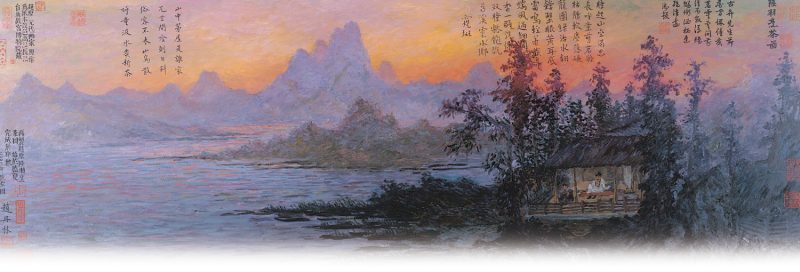
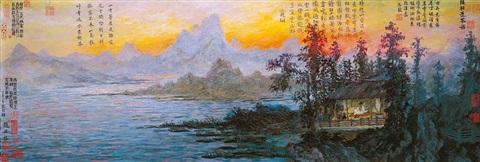
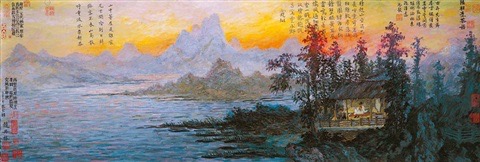
Monet NPM – Lu Yu Brewing Tea Zhao Yuan – Monet NPM (Lu Yu Brewing Tea) oil on canvas 32.5 X 96 inch 2003
Zhang, Hongtu. “Interview With Hongtu” interview by authors, 12 Nov. 2020, email.
“Zhang Hongtu,” Tina Ken Gallery, accessed 2 Dec. 2020, photo, https://www.tinakenggallery.com/en/artists/37-zhang-hongtu/biography/
“Zhang Hongtu and Leah Raintree — The Landscape of Deep Time,” EcoArt Salon, Facebook, accessed 24 Sep. 2020, Video, https://www.facebook.com/EcoArtSalon/videos/960564727774265/